2 min read · Updated 21 October 2026
Travertine finishes explained
The same travertine block can produce very different surfaces. Two choices shape the result: how the stone is cut, and how the face is finished — including whether the natural holes are filled.
Vein cut or cross cut
Travertine forms in layers. Cut parallel to the layers (vein cut), the face shows linear bands — a structured, directional look. Cut across the layers (cross cut, also called fleuri cut), it shows a cloudier, more uniform pattern.
Vein cut suits modern interiors and long surfaces where the lines can run; cross cut is calmer and easier to match across many pieces.
Filled or unfilled
Travertine has natural holes from gas bubbles trapped as it formed. Unfilled stone keeps them open for a natural, textured look. Filled stone has the holes closed with a resin or cementitious filler in a matching tone, giving a smoother surface that is easier to clean.
Over time some filler can work loose in heavy use; small repairs are normal maintenance.
Surface finishes
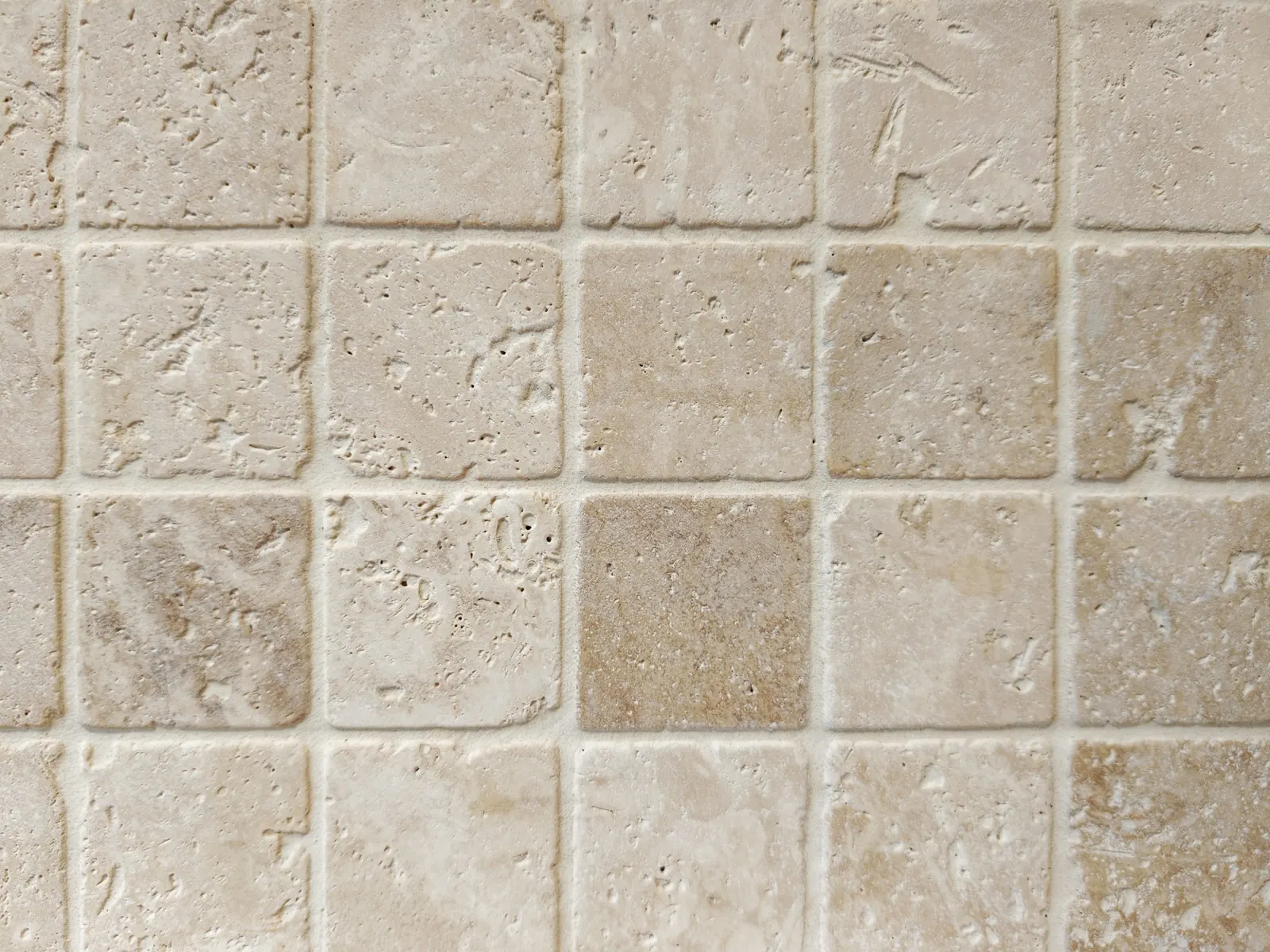
Honed: smooth and matte, the most common finish for floors and walls. Polished: glossy, only possible on filled stone, strongest colour. Brushed: lightly textured with rounded edges of the pores, soft to the touch. Tumbled: edges and face aged in a drum for an old-world, rustic look, popular for outdoor and pool areas.
Where each finish works
Floors indoors: honed or brushed, filled. Bathrooms and kitchens: filled and sealed. Outdoor and pool surrounds: tumbled or brushed, chosen with slip resistance in mind. Decorative objects: honed or polished, depending on the look.
Care
Like all calcium-carbonate stone, travertine is sensitive to acids. Use pH-neutral cleaners, seal according to use, and wipe spills quickly. For details see our guide to caring for natural stone.
Have a project in mind?
Tell us the product, quantity and delivery location. We reply with what can be supplied and a written quotation.